Psyllium, water or fiber? How to test one change at a time
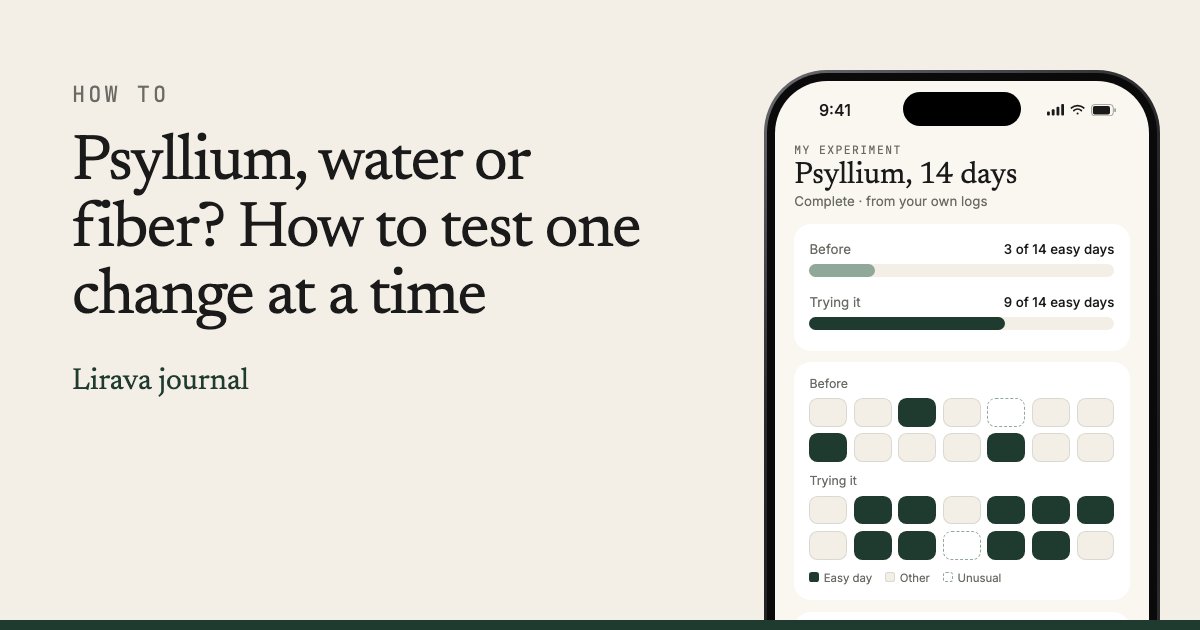
A simple, low-effort way to see whether a change to your routine is making a difference for you: a baseline, one change, and your own weeks side by side.
Key points
- Change one thing at a time. If you add psyllium, more water and a walk in the same week, you cannot tell which one helped.
- Log a baseline of one to two weeks first, then keep the change going for about two weeks.
- Rate each day yourself (easy, okay, or hard) and mark unusual days so they do not skew the comparison.
- Among fiber supplements, psyllium has the most evidence for chronic constipation, according to the 2023 AGA and ACG guideline.
- A personal experiment is a clue, not proof. Decide what to try, and what to keep, with your clinician.
Fiber, more water, psyllium, kiwis, magnesium, a morning walk. Everyone has a suggestion, and most people end up trying several at once. When things improve, it is impossible to say why. When they get worse, it is just as hard to know what to drop.
A simple personal experiment fixes that. It will not give you scientific proof, but it turns a vague feeling into a clear comparison of your own weeks.
The method in four steps
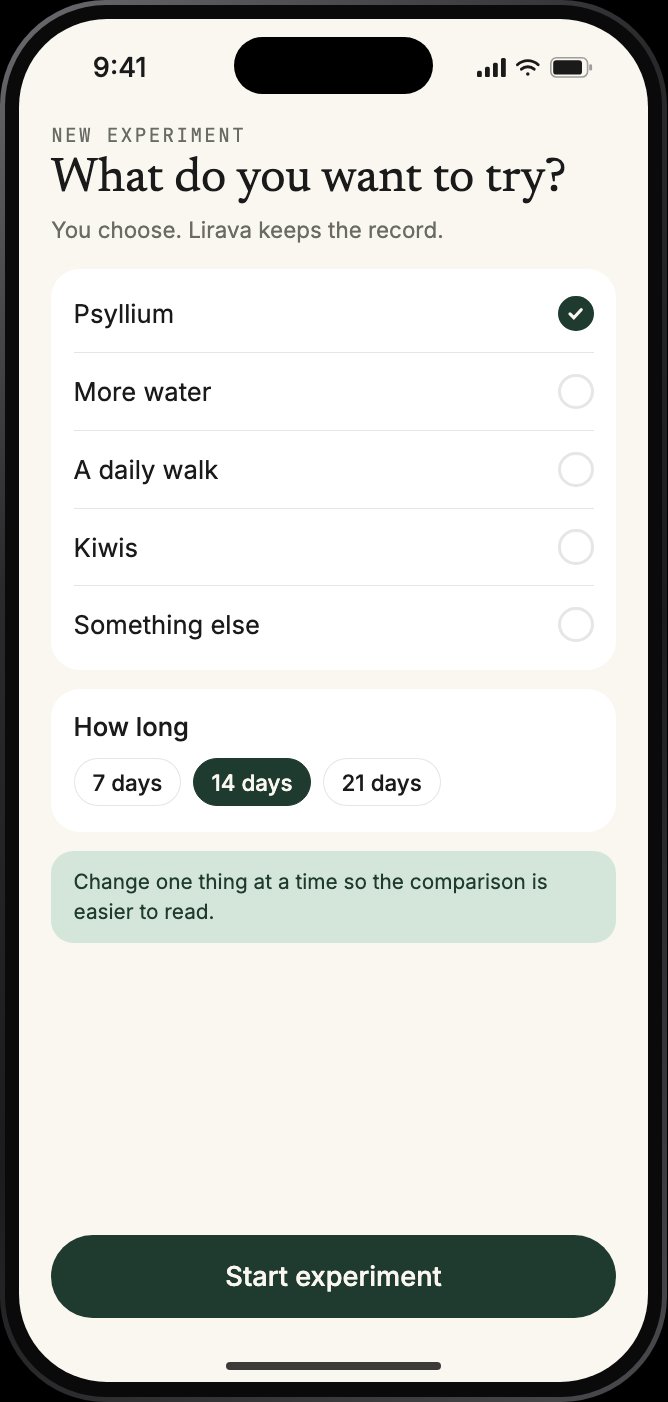
- Log a baseline for one to two weeks. Keep your routine as it is and do a quick daily check-in: stool form, straining, water, and a rough sense of fiber.
- Pick one change, ideally one you have already discussed with your clinician, and decide how long to keep it going. Two weeks is a practical minimum.
- Keep everything else steady and mark unusual days: travel, illness, stress, a new medication, or a big meal.
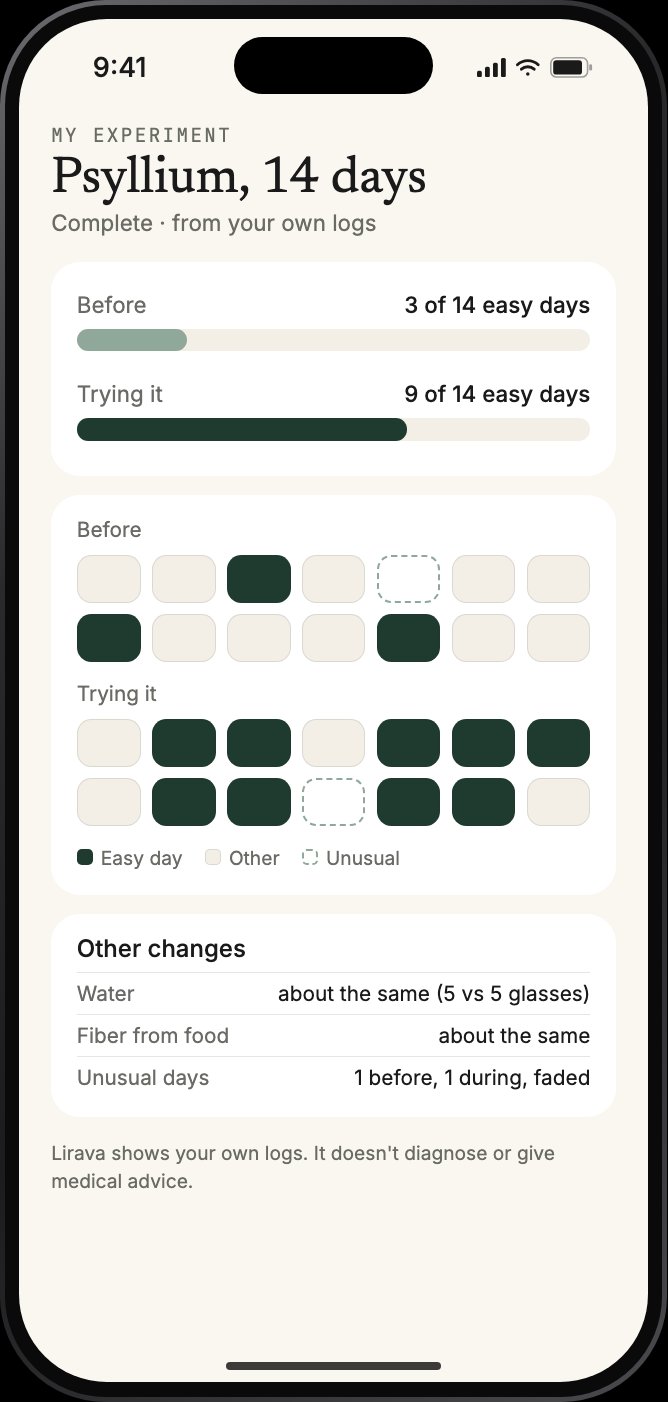
- Compare the two periods using your own daily rating of easy, okay, or hard days, leaving unusual days aside.
Why rate the day yourself
It is tempting to let an app score your day from stool type and frequency. The trouble is that what counts as a good day differs from person to person. Your own one-tap rating of easy, okay, or hard captures the thing you actually care about, and it keeps the interpretation with you and your clinician rather than with a formula.
What to keep steady, and what to just note
| Keep steady if you can | Just note it when it changes |
|---|---|
| Other supplements and medications | A new medication your doctor started |
| Your usual fluids | Days you drank much more or less than normal |
| Your usual meals, roughly | Travel, a big meal, or eating out |
| Your usual activity | Illness, poor sleep, or a stressful stretch |
You do not need a food diary for this. A daily rating of fiber (less, usual, or more) and a rough count of water glasses is enough to see whether something else drifted during the experiment.
What the evidence says about common changes
- Psyllium. In the 2023 guideline on chronic idiopathic constipation from the American Gastroenterological Association and the American College of Gastroenterology, psyllium was the only fiber supplement that appeared effective. The recommendation was conditional and based on low-certainty evidence. Fiber supplements can cause gas, especially at first.
- Water. The same guideline encourages adequate fluids alongside fiber supplements. Evidence for extra water on its own is more mixed.
- After an anal fissure. Surgical guidelines list bulking agents such as psyllium and warm sitz baths as first-line care for acute fissures. If you are healing, agree on any changes with your clinician first.
What an experiment cannot tell you
- It is not proof. Two weeks is short, and bowel habits vary naturally. A better second fortnight can be chance.
- Things tend to settle on their own. If you start an experiment during a bad stretch, some improvement may have happened anyway.
- It cannot rule out a medical problem. Bleeding, fever, constant belly pain, vomiting, or losing weight without trying are reasons to see a doctor, not to run another experiment.
Used this way, a personal experiment is a clear, private record you can bring to an appointment: what you tried, for how long, and what your own weeks looked like before and during.
Common questions
How long should a gut experiment last?
About two weeks of the change after one to two weeks of baseline is a practical minimum. Bowel habits vary a lot from day to day, so a few days is rarely enough to see a pattern.
Can I test two things at once?
You can, but you will not know which one made the difference. If you need to change two things, change them a week or two apart and mark the date of each.
Does drinking more water help constipation?
The evidence for water on its own is mixed. The 2023 AGA and ACG guideline encourages adequate fluids when using fiber supplements, which is why it helps to log water alongside fiber.
Which fiber supplement has the best evidence?
In the 2023 AGA and ACG guideline on chronic idiopathic constipation, psyllium was the only fiber supplement that appeared effective, while evidence for bran and inulin was limited. The recommendation was conditional and based on low-certainty evidence.
Sources
- Chang L et al. AGA-ACG Clinical Practice Guideline: Pharmacological Management of Chronic Idiopathic Constipation, 2023 (summary). pmc.ncbi.nlm.nih.gov
- ACG and AGA guideline on chronic constipation management (press release). American Gastroenterological Association, 2023. gastro.org
- Management of Anal Fissures: Guidelines From the ASCRS (summary). American Family Physician, 2024. aafp.org
- Constipation: symptoms and causes. NIDDK. niddk.nih.gov
Lirava is a private iOS log for life after a fissure: a 30-second daily check-in and simple experiments, stored only on your phone. Now in early access.
See LiravaThis article is general information, written by the Lirava team from the sources listed above. It is not medical advice and is not a substitute for a clinician who knows your history. If you have bleeding, severe or worsening pain, fever, or unexplained weight loss, contact a doctor. In an emergency, call 911.